Digital Foundry Uncovers Hidden Jedi Survivor PC Stutter Fix

For years, Star Wars Jedi: Survivor has been a legend for the wrong reasons. It remains a fantastic action-adventure title from Respawn Entertainment. However, the PC port was plagued by egregious performance problems at launch. Even after multiple patches, a specific “issue” persisted for gamers. Many players noticed a strange stuttering during movement. This occurred even when the frame rate appeared perfectly stable. Digital Foundry’s Alex Battalia has finally uncovered a potential solution hidden within the game’s own code.

The Mystery of the “Perfect” Frame Rate Stutter

The issue in Jedi: Survivor is quite unique and frustrating. You can have a perfectly locked 60 FPS. Your frame time graph might look like a flat line. Yet, as you run through open levels like Koboh, the game still feels jittery.

This happens because the camera and character animations skip frames. The game thread fails to sync correctly with the rendering process. To the naked eye, the camera speeds up and stops randomly. This makes the experience feel much less fluid than the numbers suggest. This issue is most visible on low-persistence displays like OLEDs. On these screens, every small skip is magnified.

Have We Fixed Star Wars Jedi Survivor on PC? Stuttering Camera/Animation Addressed

Finding the Hidden Respawn Command

Alex Battalia stumbled upon the fix while researching DLSS 4.5. He used the “Unreal Engine Unlocker” tool by Frans Bouma. This tool allows users to dump all console commands from the game’s executable file. Among the thousands of lines, he found a custom command created by Respawn.

The command is: respawn.Rendering.

By default, this value is set to zero. The internal description reads: “Enable interpolated rendering, two render frames per game thread frame.” This suggests that the engine can generate two visual frames for every single game thread update. Digital Foundry suspects Respawn uses this on consoles for the 60 FPS mode. However, for reasons unknown, it was never enabled or exposed as an option for PC users.

How the Interpolation Fix Works

This setting eases the processing burden on the game thread. It essentially halves the workload required for each frame. This does not lead to a linear doubling of performance. Other factors like the render thread or tertiary tasks still limit the CPU. However, the gains are significant for those with mid-range hardware.

On a Ryzen 5 3600, Digital Foundry saw a 20% increase in CPU-limited performance. An average of 70 FPS in Koboh Town jumped to 84 FPS. On higher-end chips like the Ryzen 7 9800X3D, the gain was a more modest 13%.

The real magic is in the “smoothing” effect. The GPU now renders frames with interpolated camera positions. The distance traveled by the camera between each frame becomes consistent. On the left side of a split-screen test, motion looks random and juttery. On the right side with the fix enabled, the motion becomes silky smooth.

Nothing in PC gaming comes for free. Interpolation introduces a small amount of input latency. Since the game is “predicting” or filling in frames, there is a delay in your raw input.

  • Ryzen 5 3600: Average latency increased by 18 milliseconds.
  • Ryzen 7 9800X3D: Average latency increased by only 7 milliseconds.

If you use a 60 FPS cap with V-Sync, the delay can grow to 30 milliseconds. For a competitive shooter, this would be a deal-breaker. For a single-player game like Jedi: Survivor, most players will find it a worthy trade-off.

There is also a warning for owners of 8 GB GPUs. Alex tested the fix on an RTX 4060. The experience was actually worse. The limited VRAM and PCIe lanes caused massive stuttering. The fix seems to require at least 12 GB of VRAM to function correctly. This is likely why Respawn did not make it a default setting in the menu.

How to Enable the Fix on Your PC

If you want to try this yourself, you cannot simply edit an .ini file. Currently, the most reliable method is using the Unreal Engine Unlocker (UEU).

  1. Download and run the Unreal Engine Unlocker.
  2. Inject the tool into the Jedi: Survivor process while the game is running.
  3. Open the in-game console (usually the tilde ~ key).
  4. Type respawn.Rendering 1 and press Enter.

You should notice an immediate change in camera fluidity. Walk around a busy area like the Rambler’s Reach Outpost to see the difference.

What This Fix Doesn’t Solve

While this is a massive win for animation fluidity, it is not a total cure. Jedi: Survivor still suffers from fundamental engine issues. This command will not fix the infamous shader compilation stutters. Those stutters occur when the game loads new assets or effects for the first time. It also won’t stop the game from crashing on Jedha when Ray Tracing is active.

Furthermore, it does not fix the poor PC menu design. It simply addresses the specific “camera jutter” that has annoyed fans since 2023. Digital Foundry notes that the 30 FPS console version remains the most “consistent” way to play. However, for PC players, this hidden command is the closest they will get to a perfect experience.

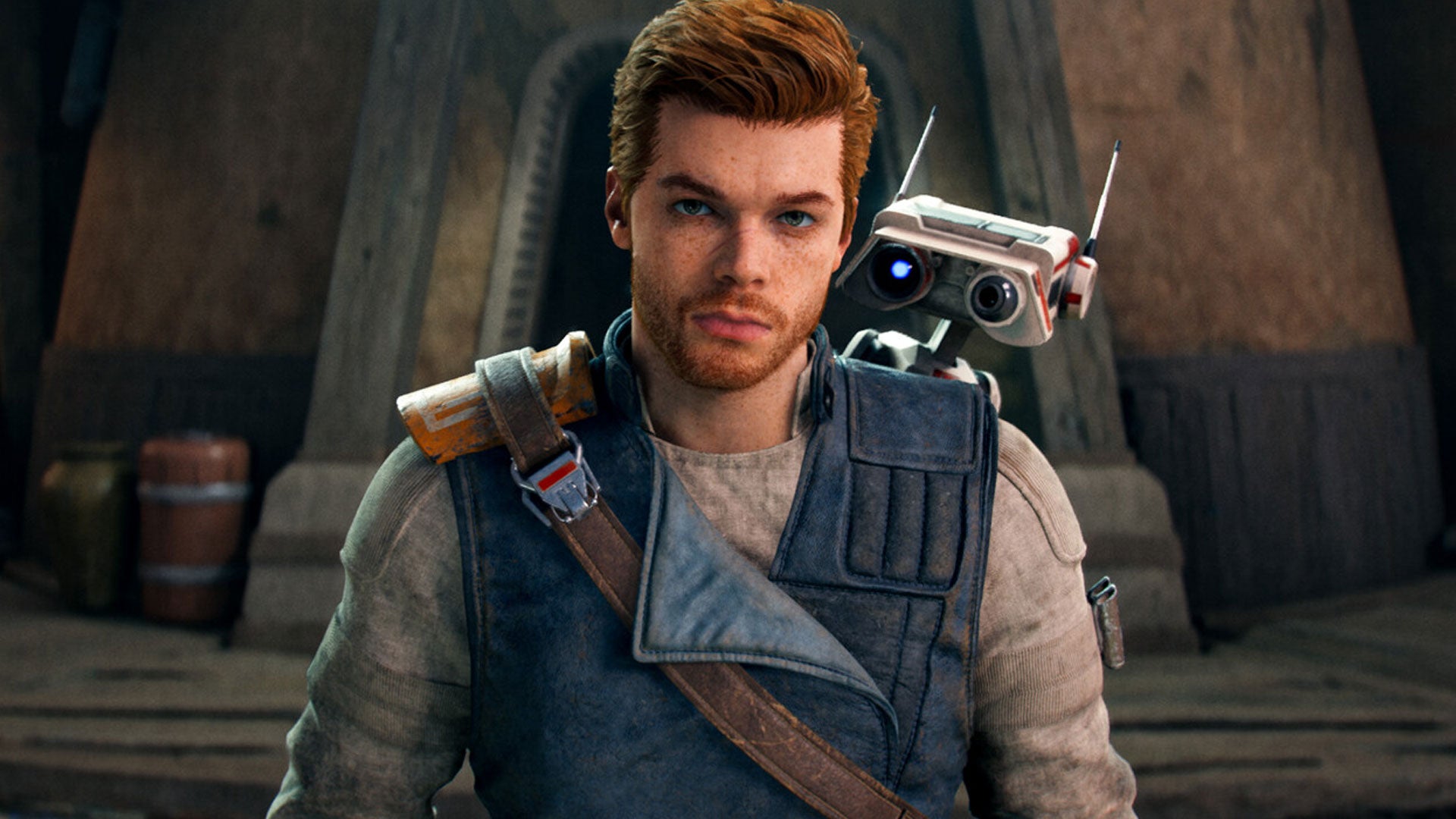
Star Wars Jedi: Survivor  Cal Kestis on Jedha
Star Wars Jedi: Survivor Cal Kestis on Jedha

Final Thoughts on Respawn’s Decision

It is rare to find a “magic button” hidden in game code. Respawn likely kept this hidden to avoid tech support nightmares. Explaining interpolation and latency to a general audience is difficult. It is a setting that shines on some rigs but fails on others.

However, for the gaming community, this discovery is vital. It proves that the community often finds ways to polish games long after the developers have moved on. If you have the CPU overhead and a decent GPU, this fix is highly recommended. It transforms the game from a stuttering mess into the smooth epic it was meant to be.

If you played Star Wars Jedi: Survivor on PC, did you experience these issues? Have your tried this fix? If so, what were the results for you? Leave your thoughts in the comments section below.

FPS Mandalorian Game Cancelled, While Third Installment of Jedi Series in Development Amongst EA Shakeup

Some huge news from EA dropped yesterday, and it seems many employees at the company have lost their jobs. The company announced a huge company wide shake-up, that is resulting in 5% of the company losing their jobs. This number equates to around 670 employees.

Following CEO Andrew Wilson’s announcement of the cuts today, EA Entertainment president Laura Miele shared a note with staff explaining in more detail what EA’s business priorities would be going forward. This includes her announcement that EA is shutting down an early development Star Wars FPS action game as a part of an ongoing focus on its own owned brands and supporting its existing games.


“It’s always hard to walk away from a project, and this decision is not a reflection of the team’s talent, tenacity, or passion they have for the game,” Miele wrote. “Giving fans the next installments of the iconic franchises they want is the definition of blockbuster storytelling and the right place to focus.”

Website IGN reports that the team that was working on the now cancelled Mandalorian project will be reassigned to other games including Iron Man, Black Panther, Apex Legends, and the third entry in the Star Wars Jedi saga.

It hasn’t been a good last couple of years for the video gaming industry. For the financial quarter ending in December of 2023, EA reported net bookings of $2.37 billion (up 7% year over year) and net revenue of $1.945 billion, largely driven by EA Sports FC and Madden. The company’s layoff of roughly 670 individuals is yet another instance of ongoing mass layoffs rocking the entire industry, impacting roughly 10,000 developers in 2023, and approaching 8,000 in just the first two months of 2024. EA itself already laid off 6% of its workforce almost a year ago, with Wilson at the time citing very similar motivations to this year’s. Despite those layoffs, the total headcount prior to today’s cuts is higher (13,400) than it was during the last mass layoff (12,900).

The company’s SEC filing states that the company will take on approximately $125 million to $165 million in costs in connection with these layoffs, including costs related to office space reductions, severance, and costs related to licensor commitments, likely related to the canceled Star Wars game.

It seems getting a video game completed and out to the public is becoming harder and harder. With this news, it also seems like my dreams of a third installment of Star Wars: Battlefront will never come to fruition.

With all of that said, hopefully these employees that were let go, will get back on their feet quickly with different companies working on successful games!

PRODUCTION DISAGREEMENTS MADE STAR WARS JEDI: FALLEN ORDER A BETTER GAME

Star Wars Jedi: Fallen Order

During Star Wars Celebration Chicago 2019, we got our first look at the upcoming video game Star Wars Jedi: Fallen Order. Since it was the first reveal, we really only got an idea of what the story will be and a look at some of the characters from the game. StarWars.com sat down with the developers to try and pry even more information away, but it seemed that they were tight-lipped until E3.

One of the most intriguing bits from the piece was a question about challenges during the production of the game. Some of the answers were very facetious, to very interesting. Vice President of Lucasfilm Games, Douglas Reilly said, “I think it’s part of the iterative process of making video games, especially when you’re working with a licensed IP. They’ve got a very strong point of view about what kind of gameplay needs they have; we have a very strong point of view about story. And sometimes those things can be difficult to sort out.” He goes on to say, “but when you’ve got partners who you trust, and people who are really talented, you find a solution to them.”

Respawn CEO Vince Zampella added, “We have clashed, and I think that’s made some things better. Because we’ve pushed beyond that to make something greater than what we would’ve come up with alone.”

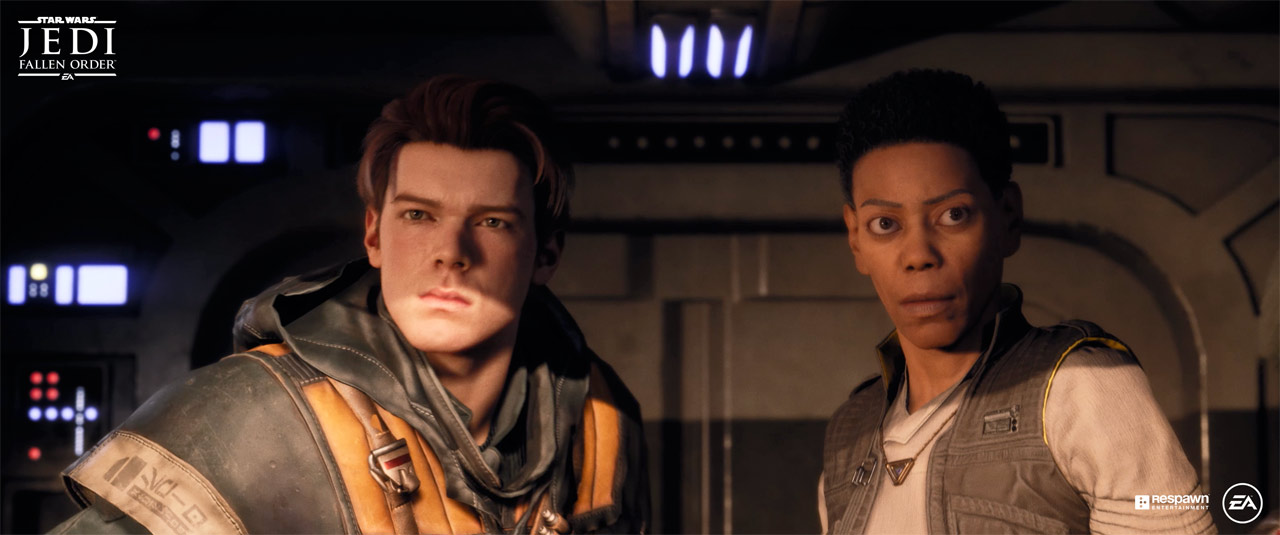
Cal Kestis learning of Order 66 (photo courtesy of Lucasfilm)

Some more interesting tidbits from the article include a question about seeing more interconnectivity between the game and other media, such as seeing some things from Charles Soule’s Vader comic from Marvel. Reilly said, “We’re always looking to make the universe feel connected, so there’ll be more for people to discover on their own.”

Reilly and Zampella were also asked what the influence of Star Wars: Knights of the Old Republic and other Star Wars games, had on the look and feel of this one. “It’s not just Star Wars games; it’s games in general. So it’s coming with a very clear perspective on the kind of games [Respawn makes], and working with our teams to go, “Okay, how do we make that a great Star Wars experience together?” And then it will hopefully have its own identity that everyone else will use at a later date to go: “Oh, are you trying to make a game just like Jedi: Fallen Order?”

It seems that we won’t be getting any new information on this game until E3 in June. With six months left until launch, I am sure that the team at Respawn is still scrambling to finish the game and want to present something awesome to fans at E3.

Are you looking forward to Star Wars Jedi: Fallen Order? Of course, leave your thoughts and comments across our social media channels and right here in the comment section.

About Star Wars Jedi: Fallen Order:

Cal Kestis—one of the last surviving members of the Jedi Order after the purge of Order 66—is now a Padawan on the run. Experience this all-new single-player Star Wars™ story from Respawn Entertainment and EA Star Wars on Xbox One, PlayStation 4, and PC this holiday season, 15 November 2019.

Star Wars Jedi: Fallen Order is an action-adventure game set after Star Wars: Episode III — Revenge of the Sith™. Develop your Force abilities, hone your lightsaber techniques, and explore the ancient mysteries of a long-lost civilization—all while staying one step ahead of the Empire and its deadly Inquisitors.