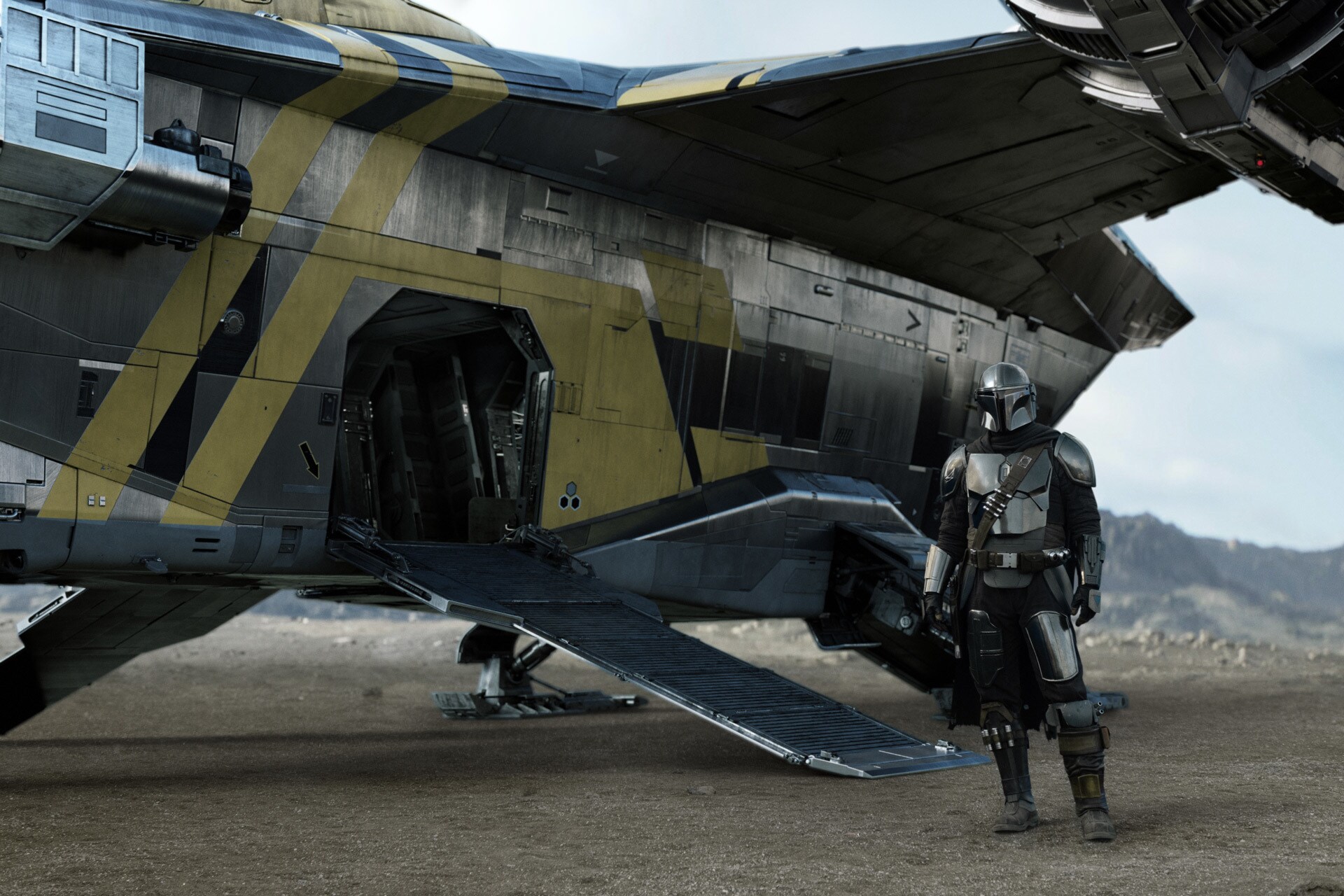
When the Razor Crest met its explosive demise in the second season of The Mandalorian, fans worldwide felt a collective gut punch. Din Djarin’s beloved ST-70 assault gunship had been more than a vehicle, it was a mobile home and a silent character in the galaxy far, far away. While the subsequent introduction of the sleek Naboo N-1 starfighter offered plenty of hot-rod flair, it always lacked the heavy-duty utility required for a bounty hunter traveling with a young ward.
With the duo’s jump to the silver screen in The Mandalorian and Grogu, director Jon Favreau and the team at Industrial Light & Magic (ILM) made the bold choice to bring back the iconic ship design. According to an interview on StarWars.com featuring ILM legends John Knoll, Hal Hickel, and John Goodson, resurrecting the Mandalorian and Grogu Razor Crest wasn’t just a narrative choice, it was a celebration of classic Star Wars practical filmmaking.
Marrying Old-School Magic with Cutting-Edge Tech
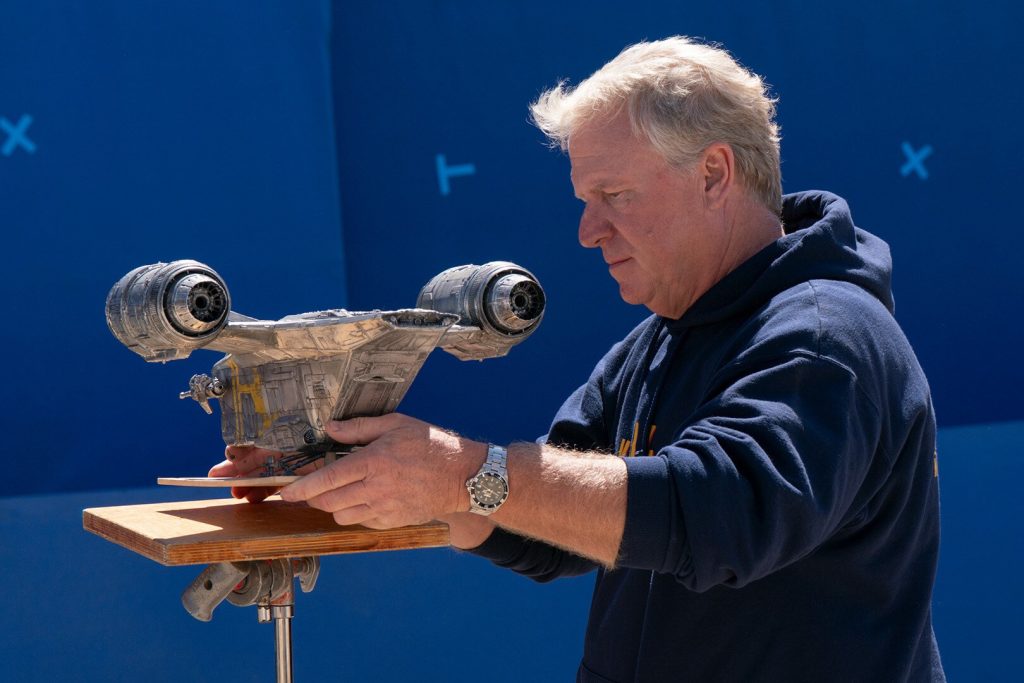
While early development on the original Disney+ series intended for the ship to be entirely digital, Favreau originally suggested building a physical miniature as a lighting reference. The ship’s reflective, bare-metal hull is notoriously difficult to light accurately in a purely virtual space.
For the theatrical movie, Visual Effects Supervisor John Knoll decided to scale up the ambition. The team built two separate physical models: a 24-inch version and a massive 48-inch version.
- The 24-inch model: Perfectly balanced for capturing fast, soaring fly-bys through the stars.
- The 48-inch model: Built specifically to facilitate incredibly detailed close-up shots, such as the ship sitting on the tarmac at Adelphi Base.
The filming workflow seamlessly blended reality and digital design. Before shooting a single frame of the physical miniatures, animators pre-visualized the sequences inside a computer. They mapped out camera moves and light placement with strict physical constraints so that the motion-control camera rigs could later replicate the paths exactly in front of the real models. Once the practical footage was captured, digital artists stepped in to add the finishing touches, compositing star fields, planets, and alien environments. In total, Knoll and his crew completed roughly 36 shots using these physical models.
A “Factory-Condition” Ride
Story-wise, this isn’t the exact ship that Moff Gideon destroyed. Instead, the movie introduces an untouched, identical pre-Empire model recovered by the New Republic from the private stash of a captured Imperial commander.
Because this is a stock restoration rather than a heavily modified mercenary vessel, the Mandalorian and Grogu Razor Crest features distinct visual differences that eagle-eyed fans will notice immediately:
- Pristine Exterior: The ship boasts a significantly cleaner, shinier, factory-condition bare metal finish, lacking the heavy oxidation and weathering of the original.
- Yellow Accents: A crisp, fully intact yellow stripe runs across the hull, marking it as a vintage, unmodified model.
- Refurbished Interior: While the internal sets from the original series were recycled for production, they were completely refurbished to look brand new.
Interestingly, this doesn’t mean the N-1 starfighter is gone. The movie quietly confirms Din Djarin still owns his customized Naboo fighter, effectively giving him a heavy-duty gunship for dangerous long-haul missions and a high-speed sports car for personal travel.
By leaning heavily on physical models and practical sets rather than relying solely on digital environments, the production captures the texture, weight, and nostalgic charm that made original trilogy space battles so captivating. The return of this starship proves that sometimes the best way to move a franchise forward is to look directly to the filmmaking traditions of the past.
No Comments yet!